
12
Jun
If you have ever wondered what is weisswurst, the answer is simple: it is one of the most iconic foods in Bavaria, and one of the most distinctive sausages in Germany. Weisswurst is soft, pale, mildly seasoned, and deeply tied to Bavarian food culture. It is not just another German sausage. It is a tradition with rules, rituals, and a flavor profile that surprises many first-time eaters.
For anyone searching how to eat weisswurst, the most important thing to know is that this sausage is not grilled or fried. It is gently heated, usually served with sweet mustard and a pretzel, and traditionally eaten before noon. That combination of taste, timing, and custom is exactly what makes Weisswurst so memorable.
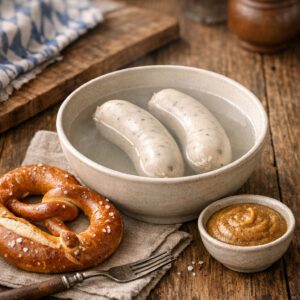
Bavarian Weisswurst is a traditional German sausage with a mild flavor, soft texture, and classic sweet mustard pairing.
Weisswurst, often called German weisswurst or Bavarian white sausage, is a traditional sausage made from veal and pork. It gets its pale color from the fact that it is not smoked and is prepared in a way that keeps it light in appearance and flavor. The texture is soft, and the seasoning is subtle, which is why many people describe it as one of the gentlest sausages in German cuisine.
The classic recipe includes veal, pork back fat, parsley, onion, lemon, and warm spices such as cardamom and mace. That mix gives Weisswurst its signature taste: mild, fresh, and slightly herbal. If you are looking for a simple Bavarian sausage explained, Weißwurst is the perfect example of how regional food can be both humble and highly specific.
When people think of German sausage, they often imagine something grilled, smoky, or heavily seasoned. Weisswurst is different. It is not designed for the barbecue. It is not meant to be crisped in a pan. It is a fresh sausage that depends on careful preparation and gentle serving.
That is part of what makes it such an authentic weisswurst experience. The sausage is traditionally heated in hot water, never boiled, so it stays tender and juicy. Its flavor is mild rather than bold, and its cultural meaning is tied to freshness, breakfast, and Bavarian ritual. In other words, Weißwurst is not just food — it is a very specific kind of food culture.
If you want to know how to eat weisswurst correctly, the process is straightforward.
The key is to keep the sausage soft and warm. Boiling can ruin the texture, and grilling changes the character completely. Weisswurst is best enjoyed slowly, with simple sides that let the sausage remain the focus.
One of the most famous parts of weisswurst tradition is the rule that it should be eaten before noon. This custom goes back to a time when the sausage was made fresh in the morning and had to be consumed quickly. Even though refrigeration has changed that practical need, the tradition remains a major part of its identity.
In Bavaria, Weisswurst is often served as part of a late breakfast or early lunch. It is a dish that belongs in beer gardens, traditional inns, and relaxed social settings. That is why searches for Bavarian food tradition and weisswurst breakfast often lead back to the same idea: this is a meal built around timing, freshness, and atmosphere.
If you are searching for what does weisswurst taste like, expect something mild, delicate, and slightly herbal. Weißwurst is not spicy in the usual sense. Instead, it has a soft savory flavor with subtle notes from parsley, lemon, and warm spices.
The texture is just as important as the taste. It is smooth and tender, which gives the sausage a refined feel compared with many other German sausages. For many people, that is the surprise: Weißwurst is comforting, but it is also elegant.
There is a practical reason why Weisswurst is not as common outside Germany: freshness matters. Traditional Weisswurst is closely tied to same-day or very fresh consumption, which makes long-distance distribution difficult. That is why people often search for buy weisswurst online or authentic weisswurst and still struggle to find the real thing.
Outside Germany, Weisswurst is usually available only through specialty importers, German delis, or select online shops. If you are looking for the best quality, freshness and traditional production methods are the two most important factors to check.
If your goal is to buy weisswurst, look for products that clearly mention Bavarian origin, fresh production, and traditional ingredients. Authentic Weißwurst should have a pale color, a soft texture, and a short ingredient list that reflects the classic recipe.
A good product description should tell you how the sausage is made, how it should be stored, and how quickly it should be consumed. Those details matter because Weisswurst is not a shelf-stable everyday sausage. It is a specialty product, and quality depends on handling as much as on recipe.
If you want to recreate the Bavarian experience, keep the serving style simple. Warm the sausages gently in hot water, place them on a plate with a pretzel, and serve sweet mustard on the side. If you want the full traditional feel, add a wheat beer and keep the presentation relaxed.
This is also the best place to think about pairing and presentation. Weisswurst works because the flavors are balanced and the meal feels complete without being complicated. That is why it remains such a strong part of German food culture.
There are a few mistakes that can easily ruin the experience:
Avoiding those mistakes is the easiest way to keep the dish authentic.
There is no difference in size, taste, or meaning between Weißwurst and Weisswurst. Both spellings refer to the same traditional Bavarian sausage, and both are pronounced the same way by German speakers. The only difference is orthographic: Weißwurst uses the German letter ß, while Weisswurst replaces it with ss. In practice, both forms are correct, and the choice often depends on context, keyboard layout, or audience. For English-language content, Weisswurst is often the more practical spelling because it is easier to type and more familiar to international readers.
Weißwurst is one of the best examples of how a regional dish can become a cultural symbol. It is mild but memorable, simple but meaningful, and traditional without feeling outdated. If you came here asking what is weisswurst, the answer is now clear: it is a Bavarian white sausage with a unique flavor, a strong tradition, and a serving ritual that makes it stand out from every other German sausage.
If you want to understand Bavarian cuisine, Weißwurst is a great place to start. It is not just something to eat. It is something to experience.

