
10
Apr
Bavaria is one of Germany’s most distinctive regions, and its traditions help define that identity. From colorful maypoles in village squares to long afternoons in shaded beer gardens, Bavarian customs bring together community, seasonal rituals, food, and local pride. If you want to understand traditional Bavarian culture, this is where to begin.
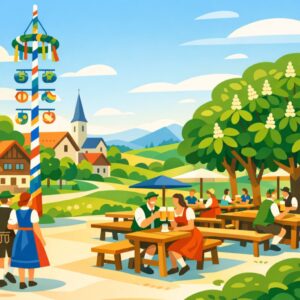
Explore Bavaria’s living traditions, from colorful maypoles and relaxed beer gardens to hearty food and local celebrations.
The Maibaum, or maypole, is one of the best-known Bavarian customs. In many towns and villages, residents raise a tall pole in the center of the community during spring and decorate it with painted designs, local symbols, or guild emblems. The event often becomes a public celebration with music, food, and a strong sense of togetherness.
The maypole is more than a decorative object. It represents village identity, craftsmanship, and community spirit. In many places, it marks the arrival of spring and gives residents a reason to gather in the square and celebrate local life.
Few traditions feel as closely tied to Bavaria as the beer garden. These open-air gathering places remain popular because they combine simple food, fresh air, and an easygoing atmosphere. People sit under chestnut trees, share a meal, and spend time together without much formality.
That relaxed style is part of the appeal. A beer garden is not reserved for special occasions. People go after work, on weekends, or during warm evenings simply to enjoy the setting and the company.
Bavarian food culture is another important part of the region’s identity. The cuisine is known for hearty dishes, bread, sausages, dumplings, and beer. A typical Bavarian meal might include Weißwurst, pretzels, roast pork, or a simple Brotzeit, the traditional cold snack that people enjoy before lunch or in the evening.
This food culture reflects the practical side of Bavarian tradition. Meals are meant to be filling, social, and rooted in local habits. They are part of everyday life, not just special celebrations.
Traditional clothing also remains an important part of Bavarian culture. On festive occasions, many people wear Dirndl or Lederhosen, especially at village festivals, family events, and seasonal celebrations. Folk music, dancing, and community gatherings continue to play a visible role in many parts of the region.
These customs are not simply preserved for show. They still shape how people celebrate, meet, and mark the seasons. That is one reason Bavarian traditions continue to feel alive rather than old-fashioned.
If you are planning a trip and want to see what to expect in Bavaria, timing matters.
That seasonal rhythm is part of what makes Bavaria so appealing. The traditions are not staged only for visitors. They are part of the region’s real social life, which gives them a natural and authentic feel.
For visitors, Bavarian traditions offer a direct look at how the region sees itself. A village maypole, a local festival, or a crowded beer garden can reveal more about Bavarian culture than a general description ever could. These customs show a strong connection to community, season, and place.
If you spend time in Bavaria in spring or summer, you are likely to encounter these traditions in everyday life. That makes them especially valuable for anyone who wants to experience the region beyond the usual tourist highlights.
Bavarian traditions remain popular because they still feel meaningful and practical. The maypole brings a village together, the beer garden turns a warm evening into a social event, and the region’s food, clothing, and celebrations keep local culture visible in daily life. If you want to understand Bavaria, these traditions are a good place to begin.
And if you are planning a visit, the best approach is simple: go where the locals gather, stay a little longer, and let Bavaria show you its rhythm.

