
28
Apr
When travelers think of German food, sausages, schnitzel, and pretzels usually come to mind first. Those classics deserve their place, but they are only a small part of the country’s culinary identity. Across Germany, regional German dishes tell a richer story: one shaped by local ingredients, seasonal traditions, and generations of home cooking. For visitors willing to look beyond the usual tourist menu, these specialties are some of the German foods tourists miss, offering one of the most memorable ways to experience the country and enjoy authentic German cuisine.
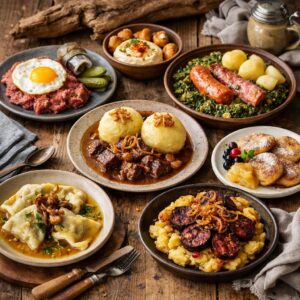
Discover authentic German regional dishes tourists often miss, from northern Labskaus to southern Maultaschen and Saxon Quarkkeulchen.
Labskaus is one of the most distinctive dishes in northern Germany. Traditionally made with corned beef, mashed potatoes, and beetroot, it is often served with a fried egg, pickles, and herring. Its bright pink color may surprise first-time visitors, but its flavor is comforting, salty, and deeply satisfying. Once a seafarer’s meal, Labskaus remains a proud part of Hamburg’s food culture.
In Bremen and Lower Saxony, Grünkohl with Pinkel is a beloved cold-weather dish. The kale is slow-cooked until tender and usually served with sausage, potatoes, and sometimes smoked meat. It is hearty, rustic, and closely tied to winter gatherings, making it far more than just a meal. For many locals, it is a seasonal ritual.
Spundekäs is a creamy cheese spread from Hesse, usually blended with onions, paprika, and a touch of wine. It is often served with pretzels or bread and enjoyed as a snack with drinks. Simple, rich, and unmistakably regional, it shows how German cuisine can be both modest and full of flavor.
Thüringer Klöße are among the best-known potato dumplings in Germany. Made from grated or mashed potatoes, they are typically served with roast meat and gravy. Their appeal lies in their texture and their ability to absorb sauce beautifully. In Thuringia, they are a cornerstone of traditional Sunday meals.
Maultaschen are large stuffed pasta pockets from Swabia, filled with meat, spinach, onions, and breadcrumbs. They can be served in broth, pan-fried, or baked with cheese, depending on the region and the cook. Often compared to ravioli, they have a character of their own and are one of southern Germany’s most beloved dishes.
Saure Kutteln, or sour tripe stew, is not for everyone, but it remains an important part of traditional cooking in parts of Franconia and Bavaria. Prepared with vinegar, onions, and spices, it reflects a time when nothing was wasted and every ingredient had a place in the kitchen. For curious travelers, it offers a direct taste of older German food traditions.
Quarkkeulchen are small fried pancakes made with quark and potatoes, then dusted with sugar and often served with applesauce or jam. They are soft, slightly sweet, and especially popular in Saxony. Because they are less visible on tourist menus, they often remain a pleasant surprise for visitors.
Plinsen are thin pancakes found in northeastern Germany, where they may be served sweet or savory. Their simplicity is part of their charm. Depending on the region, they can appear at breakfast, as a snack, or as a comforting home-style dish.
Röggelchen are small rye rolls that are especially associated with the Rhineland. They are often eaten with cheese, butter, or cold cuts and are a staple rather than a specialty in the strictest sense. Still, they are a good reminder that regional food culture is not only about elaborate dishes, but also about everyday habits.
Himmel und Erde, meaning “heaven and earth,” combines apples and potatoes, usually with black pudding or sausage. The contrast between sweet fruit and earthy potatoes gives the dish its name and its appeal. It is one of the clearest examples of how German regional cooking balances comfort and contrast.
Regional German food is more than a list of recipes. It reflects climate, history, local farming, and everyday life. Northern dishes tend to be hearty and salty, southern dishes often rich and filling, while eastern and western specialties reveal a strong connection to home-style cooking. Together, they form a living traditional German food guide and show that German cuisine is far more varied than its international stereotypes suggest.
If you want to discover these dishes at their best, start with local restaurants, weekly markets, and traditional inns. Ask what is in season, because many regional specialties are tied to specific times of year. Be open to unfamiliar ingredients and preparations. The most memorable meals are often the ones that do not look familiar at first glance.
Germany’s food culture is at its most interesting when it moves beyond the obvious. From Labskaus in Hamburg to Quarkkeulchen in Saxony, these regional dishes offer a more authentic and rewarding way to taste the country. For travelers who want more than a standard tourist meal, they are a delicious place to begin.

