
28
Apr
Celery is a versatile vegetable cherished worldwide, and in Germany, it holds a special place both in home gardens and professional kitchens. From its crisp stalks to its earthy root, celery offers a spectrum of flavors and uses. In this article, we will explore what celery really is, the main varieties cultivated in Germany, how to process it, and its cultural and historical significance. You’ll also discover a signature German-inspired recipe, health insights, and clever life hacks to make the most of every stalk and leaf.
Celery (Apium graveolens) is a member of the Apiaceae family, closely related to carrots, parsley, and parsnips. This biennial plant features fibrous, crunch-rich stalks and aromatic leaves. In its wild form, celery thrived in marshy areas of the Mediterranean and Western Europe before early cultivators selected for larger, more succulent edible parts.
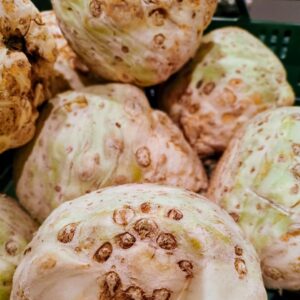
A detailed close-up view of freshly harvested celeriac roots, showcasing their unique, earthy textures and natural colors—a perfect inspiration for healthy cooking and natural food blogs.
German growers cultivate three primary celery types, each with unique characteristics and Latin classifications:
While celeriac focuses on its root, stalk and leaf celery emphasize crisp segments and foliage. In German kitchens, cooks often save the leaves for stocks or salads.
Whether using celeriac or stalk celery, proper handling is key. For celeriac, trim the tough outer skin with a sharp knife, revealing the creamy-white interior. Stalk celery benefits from removing stringy fibers along veins by running a vegetable peeler down each rib. Always wash parts thoroughly under cold water to remove soil and debris.
Both roots and stalks can be juiced. Use a high-powered juicer for celeriac to extract the thicker flesh, or stick to stalks for a lighter, green-tinted juice. Celery leaves add concentrated nutrients and fresh herbal notes—simply wash and feed them into your juicer along with stems or root chunks.
In Germany, celery is as common in hearty soups and stews as it is in crisp salads. Celeriac stars in classics like Sellerieschnitzel or creamy root soups, while stalk celery flavors stocks, sauces, and traditional Suppengrün (soup greens). Home gardeners like Bernd from Anklam cultivate celeriac in raised beds. He recalls his grandmother’s 19th-century cottage garden, where celery thrived alongside carrots and parsley, enriching family meals through the seasons.
Restaurants across Germany incorporate celery into ragouts, potato salads, and cold appetizer platters, reflecting a deep-rooted respect for locally grown, seasonal produce.
Celery packs vitamins K, A, and C, plus dietary fiber and antioxidants. In Germany, nutritionists praise its low-calorie profile and hydration-supporting water content—over 95% by weight. Integrate raw sticks into dips, blend leaves into pestos, or simmer roots in broths to retain minerals.
Remember: any health statements should remain within general dietary guidance and not imply medical claims, to stay compliant with EU and US regulations.
While Americans favor crisp, green stalks eaten raw as snacks, Germans often bake and roast celeriac for earthy depth. In the US, leaf celery sees less use beyond garnish, whereas Germans juice leaves or chop them into salads. These habits reflect culinary traditions: Germany’s cooler climate once limited tender stalk harvests to brief summer windows, encouraging root cultivation for storage.
The term “celery” traces back to Greek selinon and Latin selinum, entering German via French céleri in the 17th century. Records note celery in Bavarian monastery gardens by the early 1600s. Widespread kitchen use emerged in the 19th century, as improved root varieties like celeriac offered winter supply and richer flavor.
This recipe highlights the classic German love for celeriac’s earthy flavor while celebrating the fresh aromatic punch of celery leaves.
Do you have leftover celery leaves? Chop them, mix with a bit of olive oil, and freeze in ice cube trays. Pop a cube into stews or sauces for instant flavor and zero waste.
Celery in Germany spans from ancient monastery gardens to modern restaurant menus. Whether you grow celeriac at home or enjoy stalk celery in a fresh salad, this vegetable’s versatility shines. Its varieties offer textures and flavors for every cook, while its health benefits provide gentle nutritional support. Experiment with raw sticks, hearty soups, and vibrant pestos to appreciate celery’s full potential.
Celery provides vitamins K, A, C, fiber, and antioxidants, supporting hydration and digestion when included in a balanced diet.
Remove tough outer strings on stalks and peel the hairy surface of celeriac to reveal tender flesh.
Both have benefits: raw retains enzymes and vitamin C; cooking boosts antioxidant availability and softens fibers.
Excessive consumption may cause mild photosensitivity in very rare cases; moderate intake is safe for most people.
Yes, raw celery is safe and offers a crisp texture and nutrient density.
Avoid if you have an allergy to Apiaceae family plants or suffer from celery intolerance.
Its high water content and vitamins can support skin hydration and health as part of overall nutrition.
Daily consumption is fine within a varied diet; aim for balanced intake of vegetables.
No single food burns fat; celery’s low calorie count can fit into weight management plans.
Wash, trim strings or peel roots, then chop, slice, juice, or blend according to your recipe.
Yes, raw celery retains essential nutrients and can be a healthy snack when included in a balanced diet.
Celery supports hydration and provides antioxidants, aiding the body’s natural detox processes through the liver and kidneys.
Celery can support digestion and reduce bloating, but it is not a substitute for medical treatment.
You can enjoy celery as juice or tea to complement a detox-focused diet in moderation.
No single food targets belly fat; including low-calorie celery in a balanced diet may support weight management.
Scientific evidence does not support celery as a targeted fat-burning food.
Nutritional benefits accumulate over time; consistent consumption and overall diet quality are more important than immediate effects.
Some individuals may experience digestive upset or allergic reactions; consume in moderation.
Celery juice can be filling and hydrating, but it is not a standalone solution for a flat stomach.
Cleanses should be brief and not replace balanced meals; consult a nutrition professional for personalized guidance.
Note: This content is intended for informational purposes only and does not constitute medical or nutritional advice. Always consult with a qualified healthcare provider before making dietary changes.

