Why German Sausages Matter
German sausages are more than just a food item—they are cultural icons, regional pride, and centuries of culinary tradition wrapped in casings. From the peppery punch of Thüringer Rostbratwurst to the delicate sweetness of Weisswurst, each variety tells a story of local ingredients, historic trade routes, and artisanal butchers. In this comprehensive guide, we’ll explore five famous types of German sausages, delve into the authentic ingredients and quality standards that make them unique, share classic recipes (including a detailed German currywurst recipe), and reveal a clever life hack for effortless sausage preparation. Whether you’re a home cook, a grilling enthusiast, or simply a fan of German flavors, this 2500+ word deep dive will equip you with everything you need to recreate authentic German sausage dishes at home.
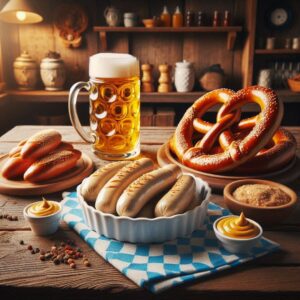
Experience an inviting German kitchen atmosphere: Weisswurst sausages, Bavarian sweet mustard, a soft pretzel, and a glass stein of beer set against traditional decor and sunlit wooden elements.
1. Regional Heroes: Five Famous German Sausages
1.1 Thüringer Rostbratwurst (Thuringian Grilled Sausage)
- Origin: State of Thuringia, central Germany
- Characteristics: Thin, long sausages seasoned with marjoram, caraway, garlic, and pepper
- Serving Style: Traditionally grilled over charcoal and served in a crusty roll with mustard
Thüringer Rostbratwurst is protected by a PGI (Protected Geographical Indication) under EU law, meaning authentic Rostbratwurst can only be produced in Thuringia following a specific recipe. The blend of marjoram and garlic gives it a savory, aromatic flavor that stands out on the grill. To serve, grill the sausages over medium-hot charcoal until the casing is crisp and charred, then tuck them into a Brötchen (German bread roll) and top with sweet German mustard.
1.2 Nürnberger Bratwurst
- Origin: City of Nuremberg, Bavaria
- Characteristics: Small, slender sausages (about 3–4 inches long) seasoned with marjoram and salt
- Serving Style: Sold by three in a roll (Drei im Weggla) or served with sauerkraut and potato salad
Nürnberger Bratwürste are prized for their delicate texture and mild, aromatic seasoning. Their small size makes them perfect for quick pan-frying or grilling. In Nuremberg, you’ll find vendors selling “Drei im Weggla”—three sausages in a soft white roll—and drizzling them with mustard as a popular street food treat.
1.3 Weisswurst (White Sausage)
- Origin: Munich, Bavaria
- Characteristics: Pale-white sausages made with finely minced veal and pork back bacon, flavored with parsley, lemon, mace, onions, ginger, and cardamom
- Serving Style: Traditionally eaten before noon, boiled in water and served with sweet mustard and pretzels
Weisswurst has a distinctive pale color because it is never smoked or grilled. Instead, the sausages are gently poached in water heated to about 75–80 °C (167–176 °F) for about 10–12 minutes. Served in a bowl of their cooking water to keep them warm, these sausages are peeled from the casing (“zuzeln”) or sliced open, then dunked in sweet Bavarian mustard and enjoyed alongside a fresh pretzel and a Weißbier (wheat beer).
1.4 Landjäger
- Origin: Southern Germany (Bavaria, Swabia)
- Characteristics: Semi-dried, smoked sausages made from beef and pork, often spiced with garlic, pepper, and juniper berries
- Serving Style: Eaten as a snack or hiking food, thanks to its long shelf life
Landjäger literally means “land hunter,” and these portable sausages were historically carried by hunters and hikers. The meat is pressed into flat sticks and lightly smoked, then allowed to air-dry. With a dense texture and rich, savory taste, Landjäger makes a perfect protein-packed snack on the go or a flavorful addition to charcuterie boards.
1.5 Blutwurst & Leberwurst (Blood & Liver Sausages)
- Origin: Pan-German tradition
- Characteristics: Blutwurst (blood sausage) made with pork blood, fat, and fillers like barley or oats; Leberwurst (liver sausage) with pork liver, fat, onions, and spices
- Serving Style: Spread on bread or served sliced with pickles and onion
These rich, flavorful sausages showcase nose-to-tail utilization. Blutwurst has a deep reddish color and creamy texture, while Leberwurst is softer and more pâté-like. Both are commonly enjoyed on a slice of hearty rye bread with sharp mustard or tangy pickles.
2. Ingredients & Quality: What Makes Them Authentic
Authenticity in German sausage means adhering to traditional recipes, using high-quality meats, and respecting regional spice blends. Laws and guild regulations often govern ingredient ratios and preparation methods.
- Meat-to-Fat Ratio: Most German sausages maintain a 70:30 to 80:20 meat-to-fat ratio to balance flavor and juiciness.
- Natural Casings: Traditionally made from cleaned pig intestines, natural casings give a characteristic “snap” when bitten.
- Spice Blends: Regional herbs like marjoram (Thuringia), savory (Franken), or juniper berries (Landjäger) define local flavor profiles.
- PGI & TSG Labels: Protected Geographical Indication (PGI) and Traditional Specialty Guaranteed (TSG) labels ensure production within specific regions and adherence to heritage methods.
3. Classic German Sausage Recipes
3.1 Grilled Thüringer Rostbratwurst with Mustard Roll
Ingredients (Serves 4):
- 8 Thuringian Rostbratwurst (about 100 g / 3.5 oz each)
- 4 German bread rolls (Brötchen)
- 4 tbsp sweet German mustard (e.g., Händlmeier)
- 1 tbsp vegetable oil or neutral oil
Instructions:
- Preheat grill to medium heat (approx. 350–400 °F / 175–200 °C).
- Lightly brush Rostbratwurst with oil to prevent sticking.
- Grill sausages for 10–12 minutes, turning occasionally, until golden brown with char marks.
- Split rolls and spread mustard inside each.
- Place two sausages in each roll, serve immediately.
3.2 Pan-Fried Nürnberger Bratwurst “Drei im Weggla”
Ingredients (Serves 4):
- 12 Nürnberger Bratwürste (6–7 g / 0.25 oz each)
- 4 small rolls
- Mustard for serving
- 1 tbsp butter or oil
Instructions:
- Heat a skillet over medium heat and add butter.
- Pan-fry sausages for 6–8 minutes, turning until evenly browned.
- Place three sausages in each roll, top with mustard.
- Serve with sauerkraut or potato salad.
3.3 Bavarian Weisswurst Breakfast
Ingredients (Serves 4):
Instructions:
- Bring water to 75–80 °C (167–176 °F); do not boil.
- Add salt and gently slide in Weisswürste.
- Poach for 10–12 minutes, maintaining temperature.
- Serve each sausage with a pretzel and mustard, peeled or dipped.
3.4 Savory Landjäger Snack Platter
Ingredients:
- 6 Landjäger sticks
- Pickles and olives for serving
- Mustard or cheese spread
Instructions:
- Slice Landjäger diagonally into 1/4-inch (0.6 cm) pieces.
- Arrange on a platter with pickles, olives, and mustard.
- Great for picnics or appetizers.
4. German Currywurst Recipe (with German Sauce)
Currywurst is a beloved street food born in post-war Berlin. It features sliced bratwurst smothered in a tangy curry-ketchup sauce. Below is an authentic recipe including German measurements.
Ingredients (Serves 4):
- 4 Bratwurst (100–120 g / 3.5–4.2 oz each)
- 2 tbsp vegetable oil
For the Sauce:
- 1 medium onion, finely chopped
- 2 cloves garlic, minced
- 200 ml ketchup (7 fl oz)
- 100 ml water
- 2 tbsp tomato paste
- 1 tbsp curry powder (plus extra for dusting)
- 1 tsp paprika powder
- 1 tbsp sugar
- 1 tbsp apple cider vinegar
- Salt and pepper to taste
Instructions:
- Cook Sausages: Heat oil in a pan over medium heat. Fry Bratwurst for 8–10 minutes until browned.
- Make Sauce: In a separate saucepan, sauté onion and garlic until translucent.
- Add tomato paste and stir for 1 minute.
- Stir in ketchup, water, curry powder, paprika, sugar, and vinegar. Simmer for 8–10 minutes, stirring occasionally.
- Season with salt and pepper.
- Assemble: Slice cooked Bratwurst into bite-size pieces, arrange on a plate, and pour sauce generously over them.
- Sprinkle extra curry powder on top. Serve with fries or a bread roll.
5. Pairings & Serving Tips
- Beer Pairings: Try a crisp Pilsner with Thüringer Rostbratwurst, a malty Hefeweizen with Weisswurst, and a Rauchbier (smoked beer) with Landjäger.
- Mustard Varieties: Offer sweet Bavarian mustard, spicy Bautzner, and coarse old-style mustard for variety.
- Side Dishes: Traditional German potato salad (with vinegar), sauerkraut, soft pretzels, and red cabbage slaw complement sausage dishes.
6. Life Hack: Effortless Sausage Peeling & Reheating
Want perfect Weisswurst or bratwurst reheated without drying out? Use a double-boiler technique:
- Fill a saucepan with a couple of inches of water and bring to a simmer.
- Place sausages in a heatproof bowl resting over the water (bowl should not touch water).
- Cover and steam for 5–7 minutes until heated through—no direct contact prevents casing splitting.
- For peeling Weisswurst, start at the thicker end and roll the casing down as if removing a sock. This keeps the sausage intact and tidy.
7. Where to Buy on GermanBuy.net
At GermanBuy.net, you can stock up on convenient canned Weisswurst that delivers authentic Bavarian flavor straight from the can, along with a curated selection of premium German mustards to complement every bite. Each product page features storage advice, serving suggestions, and bundle offers—making it easy to bring genuine German taste to your table.
Conclusion
German sausages offer a world of flavor—from the peppery bite of Thuringian Rostbratwurst to the creamy comfort of Weisswurst breakfast. By understanding the authentic ingredients, mastering traditional recipes such as currywurst, and applying simple life hacks for preparation, you can bring the taste of Germany to your home kitchen. Visit GermanBuy.net to discover and order the finest artisanal sausages, mustards, and accompaniments, and elevate your next meal into a true German feast.
FAQs about Weisswurst and German Mustard
What is Weisswurst made of?
Traditional Weisswurst is made from finely minced veal and fresh pork back fat. It is seasoned with parsley, lemon zest, mace, onions, and ginger. The sausage is known for its pale color and delicate flavor.
How do you heat canned Weisswurst correctly?
Place the canned Weisswurst in a pot with hot (not boiling) water and let it warm gently for about 10 minutes. Avoid boiling to prevent the casing from splitting.
Why is German mustard different from American mustard?
German mustard often has a milder or sweeter profile, especially varieties from Bavaria. It’s made with milled yellow or brown mustard seeds and may include honey or apple puree for a smooth finish, perfect for pairing with Weisswurst.
How long does canned Weisswurst last?
Unopened canned Weisswurst typically has a shelf life of up to 12–24 months. Once opened, refrigerate and consume within 3–5 days, following the label instructions.
Where can I buy Weisswurst and sweet mustard from Germany?
You can purchase canned Weisswurst and authentic Bavarian sweet mustard at GermanBuy.net, your trusted source for select German food products.


