
21
Apr
A German bakery is more than a place to buy bread. It is a small stage on which everyday life, regional pride, and a long baking tradition come together. For first-time visitors, stepping into one can feel like discovering a local habit that has been refined over generations: the quiet morning queue, the smell of fresh rolls, the glass counter lined with cakes, and the simple pleasure of choosing something good for the day ahead.
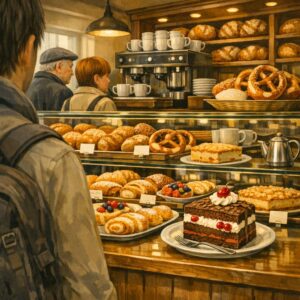
A German bakery offers fresh Brötchen, rye bread, pretzels, cakes, pastries, and coffee, making it an essential stop for first-time visitors.
In Germany, bread is not an afterthought. It is part of the rhythm of the day, from the first roll at breakfast to a slice of cake in the afternoon. Bakeries are woven into daily life because they offer more than convenience. They offer routine, quality, and a direct connection to regional food culture. In many towns, the bakery is one of the few places where visitors can taste local identity in a single stop.
That is what makes German bakeries so rewarding. They are practical, but never plain. They are familiar, but rarely boring. And they give travelers a chance to experience a side of Germany that is both ordinary and deeply cultural.
The first challenge for many visitors is simply choosing the right door.
A Bäckerei is the classic bakery, focused on bread, rolls, and savory baked goods. This is where to go for crusty loaves, Brötchen, pretzels, and sandwiches.
A Konditorei leans more toward cakes, tarts, pastries, and sweet specialties. If the goal is a proper coffee-and-cake stop, this is often the best choice.
A Backshop is usually the most convenient option, often found in supermarkets or train stations. It can be useful in a pinch, but the quality is usually less distinctive than in a traditional bakery or pastry shop.
For first-time visitors, the safest rule is simple: if time allows, choose a Bäckerei or Konditorei. That is where the craft is most visible.
Ordering in a German bakery is usually straightforward, even if the counter looks busy. Customers generally wait their turn, then point to what they want or name it directly. Staff may ask whether the item is for here or to go, and payment usually happens at the counter.
The pace can feel brisk, but it is rarely unfriendly. In fact, many bakeries are efficient precisely because they serve a steady flow of regular customers. A calm voice, a polite greeting, and a little patience go a long way.
For visitors, the best approach is to look first, decide second, and order with confidence. German bakeries reward curiosity, not hesitation.
A few words make the experience much easier.
Brötchen are bread rolls and one of the most important parts of German breakfast culture. Roggenbrot is rye bread, often dark and hearty. Vollkornbrot means whole-grain bread. Laugengebäck covers pretzels and other lye-based baked goods. Teilchen refers to small pastries. Kuchen means cake. Filterkaffee is drip coffee. Milchkaffee is coffee with milk.
Knowing these terms does more than help with ordering. It opens the door to the bakery’s logic, where bread, pastry, and coffee each have their own place.
A first bakery visit should feel like an introduction, not a test. The best starting point is usually a mix of something savory and something sweet.
A Laugenbrezel is a classic choice: soft inside, slightly salty, and deeply satisfying. A Käsebrötchen gives a simple but reliable taste of the everyday bakery counter. A Mohnschnecke offers a richer, more indulgent pastry option. For cake, Apfelkuchen, Streuselkuchen, and Käsekuchen are among the most approachable choices.
Regional specialties are worth seeking out as well. In Hamburg, Franzbrötchen is a local favorite. In Berlin, the Berliner remains a classic. In southern Germany, pretzels and sweet yeast pastries often take center stage.
Many visitors arrive too late and find that the best items are already gone. Others expect a café-style menu full of elaborate drinks and miss the point of the bakery entirely. A German bakery is not trying to imitate a coffee chain. It is offering something more grounded: fresh bread, honest pastries, and a daily ritual that locals trust.
Another common mistake is ordering too quickly without looking at the display. The better approach is to slow down, take in the selection, and ask if something is regional or seasonal. That is often where the most memorable choices appear.
German bakeries are usually good value. Rolls are inexpensive, cakes are generous, and coffee tends to be simple rather than theatrical. Portions are satisfying without being excessive, which fits the broader logic of the place: enough, but not too much.
A few small habits help. A friendly greeting is appreciated. Waiting your turn matters. If you eat in, returning trays and using the tongs for self-service items shows good manners. None of this is complicated, but it helps visitors blend in naturally.
A German bakery is not only about food. It is about craft, routine, and the quiet confidence of a culture that values doing simple things well. The smell of fresh bread, the careful arrangement of cakes, the steady morning rhythm, and the regional specialties on the counter all tell the same story: this is a place where everyday life still matters.
For first-time visitors, that makes the bakery one of the warmest and most revealing places to begin. It is affordable, approachable, and unmistakably local. And it offers something that no guidebook can fully replace: a direct taste of how Germany lives, one roll, one cake, and one cup of coffee at a time.

